Ford Models
BRONCO
BRONCO SPORT
C-MAX
CAPRI
CONTOUR
CONTUR
COUGAR
CROWN VICTORIA
ECONOLINE
ECOSPORT
EDGE
ESCAPE
ESCORT
EVEREST
EXPEDITION
EXPLORER
F150
F250
F350
FIESTA
FOCUS
FOCUS ST
FORD
FREDA
FREESTYLE
FUSION
GALAXY
GRANADA
Ford photos, specs - Car Pictures & Images
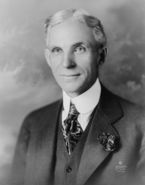
"Ford" redirects here.
For the 38th President of the United States, see Gerald Ford.
The Ford Motor Company (NYSE:F) is an American multinational corporation and the world's fourth largest automaker based on worldwide vehicle sales, following Toyota, General Motors, and Volkswagen. Based in Dearborn, Michigan, a suburb of Detroit, the automaker was founded by Henry Ford and incorporated on June 16, 1903. In addition to the Ford, Lincoln, and Mercury brands, Ford also owns Volvo Cars of Sweden, and a small stake in Mazda of Japan and Aston Martin of England. Ford's former UK subsidiaries Jaguar and Land Rover were sold to Tata Motors of India in March 2008. |
Used Ford


In 2007, Ford fell from the second-ranked automaker to the third-ranked automaker in US sales for the first time in 56 years, behind General Motors and Toyota. Based on 2007 global sales, Ford fell to the fourth-ranked spot behind Volkswagen. Ford is the seventh-ranked overall American-based company in the 2007 Fortune 500 list, based on global revenues in 2007 of $172.5 billion. In 2007, Ford produced 6.553 million automobiles and employed about 245,000 employees at around 100 plants and facilities worldwide. Also in 2007, Ford received more initial quality survey awards from J. D. Power and Associates than any other automaker. Five of Ford's vehicles ranked at the top of their categories and fourteen vehicles ranked in the top three. Ford introduced methods for large-scale manufacturing of cars and large-scale management of an industrial workforce using elaborately engineered manufacturing sequences typified by moving assembly lines. Henry Ford's methods came to be known around the world as Fordism by 1914. Main article: History of Ford Motor CompanyFord was launched in a converted factory in 1903 with $28,000 in cash from twelve investors, most notably John and Horace Dodge (who would later found their own car company). During its early years, the company produced just a few cars a day at its factory on Mack Avenue in Detroit, Michigan. Groups of two or three men worked on each car from components made to order by other companies. Henry Ford was 40 years old when he founded the Ford Motor Company, which would go on to become one of the world's largest and most profitable companies, as well as being one to survive the Great Depression. As one of the largest family-controlled companies in the world, the Ford Motor Company has been in continuous family control for over 100 years. Members of the board as of early 2007 are: Chief Sir John Bond, Richard Manoogian, Stephen Butler, Ellen Marram, Kimberly Casiano, Alan Mulally (President and CEO), Edsel Ford II, Homer Neal, William Clay Ford Jr., Jorma Ollila, Irvine Hockaday Jr., John L. Thornton and William Clay Ford (Director Emeritus). » Read More About Ford |