Year of Ford Fiesta
Ford Fiesta photos, specs - Car Pictures & Images
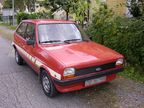 The Ford Fiesta is a small front wheel drive supermini car designed by the Ford Motor Company and built in Europe, Brazil, Argentina, Mexico, Venezuela, China, India and South Africa. The model is marketed worldwide, including Japan and Australasia, and was sold briefly in North America. It is one of Ford's most successful cars with over ten million sold in seven distinct generations since 1976 and production continues, with an eighth generation going on sale, initially in Europe, during the Fall / Autumn of 2008. It is also set to be produced at the company’s Cuautitlán Assembly Plant in Mexico starting in late-2009. |
Used Ford Fiesta


In the early 1970s, European demand from consumers for superminis was rising. Even Ford's smallest model, the Escort, was a conventional front-engined, rear wheel drive car; yet competitors were launching smaller, front wheel drive cars, like the Fiat 127 and the Renault 5. The effects of the 1973 energy crisis was also increasing demand for smaller cars. BMC (which had since merged into British Leyland) had entered the mini-car market with its Mini in 1959, while the Rootes Group had launched the ultimately less successful Hillman Imp in 1963, but times had moved on and people looking for small cars now wanted practical hatchbacks instead of conventional saloons. Vauxhall had entered the modern supermini market with its conventional Chevette three-door hatchback early in 1975. Ford needed an advanced small car to compete in this emerging market. After research and many mock-ups, a prototype and project known as "Bobcat" was created, which would be the basis of Ford's new car. The original plans for the "Bobcat" specified a desire that the new car cost US$100 less to produce than the Ford Escort. The short listed names for the new car designed by the project Bobcat team (headed by Mr Trevor Erskine) were Amigo, Bambi, Bebe, Bravo, Bolero, Cherie, Tempo, Chico, Fiesta, Forito, Metro, Pony and Sierra. Despite more board votes for "Bravo", Henry Ford II personally overruled and named the car "Fiesta", while "Sierra" was introduced on the Cortina replacement in 1982, and ironically the "Metro" nameplate was introduced by rival manufacturer British Leyland for the similar-sized Austin Metro in 1980. The name Fiesta belonged to General Motors at the time; however, it was freely given for Ford to use on their new B-class car. After years of speculation by the motor press about Ford's new car, it was unveiled in late 1975. Mechanically, the Ford Fiesta followed tradition, with an end-on four-speed manual transmission mounted to a new version of the Ford Kent OHV engine, dubbed "Valencia", named after the brand new Spanish factory in Almussafes, Valencia, developed especially to produce the new car. Ford's plants in Dagenham, England and Cologne, Germany were also used to manufacture Fiestas. To cut costs and speed up the research and development time, many modified Kent engines destined for the Fiesta were tested in Fiat 127s. This also allowed covert road testing across Europe. It was only the second hatchback mini-car to have been built in the UK by this stage, being launched a year after the Vauxhall Chevette, but a year before the Chrysler Sunbeam and four years before the Austin Metro. » Read More About Ford Fiesta |
Ford Fiesta Pictures by Years


