Year of Nissan Safari
Nissan Safari photos, specs - Car Pictures & Images
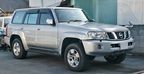 The Nissan Patrol is a Four wheel drive vehicle manufactured by Nissan in Japan since 1951. The car is available and produced mostly in Iran, Australia; and also in New Zealand, Central America, South America, South Africa, Western Europe, Brunei Darussalam, Indonesia (discontinued in 2006), Philippines, and the rest of the Middle East and it is in direct competition with the Toyota Land Cruiser. The Patrol is available with either two door ( Short Wheel Base or SWB ), four door wagon ( LWB, Long Wheel Base ) and Utility / Cab Chassis Variants. The old Y60 (GQ) platform is still manufactured as a military vehicle in the countries of Asia and the Middle East, and various versions of the Patrol are widely used by United Nations agencies. Users respect the vehicle for its power and durability, and modern version of the Nissan Patrol remains in production. |
Used Nissan Safari


Nissan built the first Patrols in the 1950s, and were designed for various purposes, mainly military. The soft-top Nissan Patrol 60( two door Wheel Base 2200 mm ) and G60 ( two door Wheel Base 2500 mm ) were first sold in Australia in 1960. Left-hand drive model L60 / GL60 was sold outside of Australia. The 60 series was the first vehicle to drive across the Simpson Desert in Australia. In 1963, the KG60 ( and KGL60 ) hard-top models were introduced. The short wheel base version or the Utility version, has been the "Winch Challenge" competitors vehicle of choice, due to its inherent driveline strength, ease of modification, relative light weight, and popularity. Name Variations160, Y60 and Y61 series were sold in Japan under the name Nissan Safari, from 1980 to 2007. Until 1994, Ford rebadged the Australian version of the Y60 (GQ) Patrol, as the Maverick. In some European countries the Nissan Patrol was for a short while marketed as Ebro Patrol. The Indian Army used the Nissan Patrol 1952 model under the light truck category. The name as per the Indian army records is Jonga. Under license from Nissan, the Indian government indigenously produced these vehicles, in their Vehicle Factory at Jabalpur. Jonga has been replaced by the lighter Mahindra & Mahindra jeeps. Most army auctioned pieces have also been scrapped by their subsequent civilian owners. Hence the Jonga is becoming a rarity. You will find some Jongas in the hill stations along the Himalayas like Darjeeling, ferrying passengers from the foothills and winding up the mountain roads. IcelandThe Icelandic expeditionary forces deployed on a peacekeeping mission in Afghanistan since 2004 used heavily modified Nissan Patrol for mobile observation missions in mountainous areas in Northern Afghanistan. IrelandThe Irish Army and other branches of the Defence Forces use the Nissan Patrol as their main utility vehicle. The 260 series was first delivered in 1989 as a replacement for the Land Rover 109 and 110. All were modified to reflect their military function and many were fitted for radio. Duties include escorting vehicles in military convoys and towing support weapons into and out of action. The newer GRTD6 has been in service since 2000 although some of the 260 series still remain in service. The 260 series has better off-road capabilities and is therefore retained by the army off-road driving school. Most of the 260 series had 24 volt alternators and so were not fitted with civilian radio. This made them unpopular with many drivers, not surprisingly. Defence forces mechanics have modified them to take a second 12V alternator as to enable them to power radio batteries. » Read More About Nissan Safari |
Nissan Safari Pictures by Years


