Year of Nissan Presea
Nissan Presea photos, specs - Car Pictures & Images
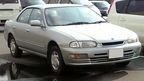 The Nissan Presea was a compact car, produced for the Asian market from 1990 to 2000. The original R10 Presea was based on the B13 Nissan Sentra/ Sunny platform. It shared many attributes with its sibling model, however, body panels and interior were done to a much higher specification. Interior fabrics matched those on the Bluebird , with standard features including automatic headlights, lighted keyslot, rear-illuminated instrument cluster, integrated sound-system, automatic climate control, digital temperature control, adjustable shoulder height seat-belts, 4-way adjustments, lumbar support for the driver's seat, windscreen wipers with adjustable intermittent timings, remotely-controlled wing mirrors that folded close and most importantly, frameless windows that mimicked the NX Coupe and Silvia. In fact, so feature-full and advanced was the car that many units had 4-disc brakes with ABS and a rear windscreen wiper. |
Used Nissan Presea


The A-pillar was slightly thinner than most compact cars, and the B-Pillar was practically non-existent from the outside, and on the inside, it was just wide enough to accommodate the seat-belt assembly. The C-pillar created a wrap-around rear windscreen. All these design features allowed for a more than 300-degree of vision for the driver, much like that of a fighter pilot. The rounded exterior left no visible straight edge on the car, and the grill-less front end gave the car a very sleek and futuristic look. The R11 Presea launched in 1995 was slightly lengthened. In some countries including Japan, the venerable SR18DE with 125 hp replaced the 110 hp SR18D(i) engine, alongside with GA15DE and SR20DE engines. It still had the same drive-train as Nissan Sunny B14 (1994-1998) and the same frame-less door windows as the R10 Nissan Presea, although it was a little longer (4425 mm + 2525 mm wheelbase) wider (1695 mm) and taller (1325 mm). In Singapore, Thailand and New Zealand, the R11 Presea came predominantly with the ancient 1.6L GA16DE. With essentially every curve and panel being unchanged, and only a fresher looking headlights and rear lamp cluster the car still had the same old macpherson struts suspension up front and rear multi link geometry. Market demand for such a car fell rapidly, which was similar to the disappearance of the 4-door Honda Integra. The demand for luxury compacts had fizzled out. DimensionsThe Presea was an in-betweener - halfway between the Sunny/ Sentra/ Pulsar and Bluebird/ Primera ranges. Compared to most compact cars of that time, the Nissan Presea was quite long. The R10 stood at 4420 mm, 15 centimetres longer than the Sentra. It was also pretty low for sedan at 1320 mm; with passengers often feeling the need to stoop to get into the car. At 1690 mm wide, it was as wide as it needed to be for 2 adults (and possibly a child) in the rear seats. The slightly longer wheelbase (compared to the Sunny) at 2500 mm was class leading for that era of compact cars. All these dimensions added up to a comfortable (albeit low) car with decent comfort and presence. The boot space was more than adequete, at over 300L in capacity. Due to the way the backseats lean back (which in turn gave the rear passengers a lot more comfort) objects over 1000 mm in length and 1200 mm in width could fit. The boot height of over 400 mm also allowed for a competent handling of most purchases during shopping sprees. However the narrow aperture height limited its usability. » Read More About Nissan Presea |
Nissan Presea Pictures by Years


