Year of Dodge Shadow
Dodge Shadow photos, specs - Car Pictures & Images
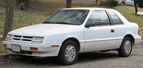 For 1987, Chrysler Corporation introduced two new compact cars, the Dodge Shadow and the Plymouth Sundance (which turned in similar sales figures), intended to replace the Dodge Charger - Dodge Omni and Plymouth Turismo - Plymouth Horizon, respectively. They were built in Sterling Heights, Michigan and Toluca, Mexico. In Mexico, they were marketed as Chrysler Shadows, although they were rebadged Plymouth Sundances. The first car rolled off the assembly line on August 25, 1986. |
Both 2-door and 4-door models were built using a variant of the K-car platform, known as the P-body, which was based on a combination of the Dodge Daytona's suspension with a shortened version of the Dodge Lancer's body. While they looked like regular sedans and coupes, they were actually hatchbacks. Chrysler considered this a special feature and advertising literature referred to it as "hidden hatchback versatility". The relatively large storage capacity of these vehicles was a major selling point for the company. Carroll Shelby Enterprises modified Shadows into several performance-oriented vehicles such as the Shelby CSX, which was equipped with a turbocharged 2.2 L engine producing 174hp (130kW). Because of the car's light weight, it was capable of acceleration equal or greater than that of many contemporary muscle and sports cars of the time. A version without the intercooler, rated at 150hp (112kW), was sold to Thrifty as the CSX-T. A convertible version of the Shadow debuted in 1991, the same year Chrysler introduced stripped-down, budget-priced "America" models of the coupe and sedan models. At the time, the Shadow and Sundance were the lowest-priced cars on the market with a standard driver's side airbag, which had been made standard on all US-market domestic Chrysler cars in 1990. While the Shadow and Sundance were popular until they were discontinued, like the Ford Escort and the Chevrolet Cavalier, they failed to make a profit. The Shadow received cosmetic updates for 1989: the inset sealed-beam headlamps were discarded in favor of aerodynamic composite units. A new body-color grille and new taillights were among other minor changes. A motorized passenger's side seat belt was added to US-market Shadows in 1994, to comply with Federal Motor Vehicle Safety Standard 208's requirement for passive restraints. These motorized belts do not comply with Canada's safety standards; Canadian-market Sundances continued to use a manual passenger seatbelt, and 1994 Shadows cannot legally be imported across the US-Canada border in either direction. » Read More About Dodge Shadow |
Dodge Shadow Pictures by Years
