The History Of Nissan 300zx
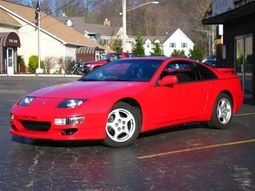
The Nissan 300ZX, also known as the Nissan Fairlady Z, is a sports car that was produced by Nissan. It comprises the third and fourth generations of the Z-car line-up, respectively given the chassis designations Z31 and Z32.
The 300ZX name followed the numerical convention initiated with the 240Z, put forth by Yutaka Katayama, the one time president of Nissan Motors USA. The "X" was added to the model name by its predecessor signifying "luxury". The name was used in most markets with the exception of a few including the Japanese home market, there the car like all previous Z cars was sold as a "Fairlady Z".
The Z31 and Z32 feature a 3.0litre, V6 naturally-aspirated and single (z31) or twin (z32) turbocharged engine. Although both motors are from the same VG series and have the same displacement, the output of the Z32's VG30DE and VG 30DETT is greater than the Z31. The VG30DE series is also double overhead cam and variable valve timing variable valve timing.< while the older VG30 is a single overhead cam design. The naturally-aspirated Z32 has 222hp (166kW) and 198lb·ft (268N·m) of torque versus the Z31 with 160-165hp and 174lb·ft (236N·m) of torque. Similarly, the twin-turbo Z32s have 300hp (220kW) and 283lb·ft (384N·m) torque versus the single turbo Z31, which has 200-205hp and 227lb·ft (308N·m) of torque. The Z32's twin turbo motor is also intercooled unlike the z31 turbo.
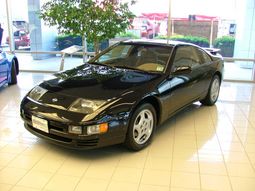
The Z31 chassis was designed after the previous Z-car, the Nissan 280ZX, and had two special editions based on it. The 50th Anniversary Edition focused on luxury to celebrate the company's semi-centennial in 1984, while the Shiro Special, released 4 years later, boasted performance-oriented upgrades. Styling would be completely redesigned with the release of the Z32, tending toward finer curves and more efficient aerodynamics. The newer chassis also featured hydraulic rear wheel steering called HICAS (in 1994 changed to an electric actuator called SuperHICAS), in its top-of-the-line models. Although it was not a special edition, in 1996 Nissan designated the final 300 American units the Commemorative Edition. Production of the Z32 ceased outside of the home market and continued in Japan until August 2000.
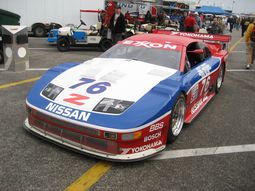
True to its heritage, the race-only 300ZX cars had several notable victories, including the 1986 Trans Am series and the 1994 24 Hours of Daytona. However, auto sports politics and a controversial GTS-1 class win at the 24 Hours of LeMans that same year prompted the International Motor Sports Association to declare the twin turbo engine illegal for future competition. The 300ZX also holds the E/ BMS land speed record of 419.84km/ h (260.87mph) from the 1991 Bonneville Speed Trial.
Throughout its life, the 300ZX has been praised by critics. Car and Driver placed the car on its Ten Best list for 7 consecutive years and Motor Trend awarded it as the 1990 Import Car of the Year.[citation needed]
The Z31 chassis designation was first introduced in 1983 as a 1984 Datsun/ Nissan 300ZX. This continued until 1985 when Nissan standardized their brand name worldwide and dropped the Datsun badge. Designed by Kazumasu Takagi and his team of developers, the 300ZX improved aerodynamics and increased power when compared to its predecessor, the 280ZX. The newer Z-car had a drag coefficient of 0.30 and was powered by Japan's first mass-produced V6 engine instead of an I6. According to Nissan, "the V6 engine was supposed to re-create the spirit of the original Fairlady Z."
This new V6 (2960 cc) Single overhead cam engine was available as a naturally-aspirated VG30E or a turbocharged VG30ET producing 160hp (119kW) and 200hp (150kW) respectively. The engine was either a type A or type B sub-designation from 1984 to April 1987, while models from May 1987 to 1989 had a W sub-designation. The W-series engines featured redesigned water jackets for additional cooling, fully floating piston wrist pins, and more power--165hp naturally-aspirated and 205hp (153kW) turbocharged. The 1984 to 1987 turbo models featured a Garrett T3 turbocharger with a 7.8:1 compression ratio, whereas 1988 to 1989 models featured a low inertia T25 turbocharger with an increased 8.3:1 compression ratio. Finally, these engines were equipped with self-adjusting hydraulic valve lifters.
Japanese market
On the home market, the Z31 also came with a 2.0liter motor. The 200Z, 200ZG, and 200ZS used the VG20ET motor while the 200ZR had the RB20DET. The only factory Z31 variant to use the VG30DE engine is the 300ZR. The Japanese 300ZX Turbo makes the same 200hp (149kW) as the USDM VG30ET, outperforming the 2.0liter Z31s as their engines only made 170-180hp. This was to "make the most of the local taxation laws."
Australian & European models
The Australian & European models made 230hp in turbo form due to a better cam profile, also known as the nismo camshafts. Some models were also equipped without catalytic converters. All European turbocharged models received a different front lower spoiler as well, with 84-86 models being unique and 87-89 production having the same spoiler as the USDM 1988 "SS" model.
Chassis
The Z31 chassis was based on the 280ZX, but improved upon it. Although the newer chassis had the same wheelbase and MacPherson strut/ semi-trailing arm independent suspension, it handled and accelerated better than the 280ZX it replaced. Turbocharged models, except for the Shiro Special edition, had an additional innovation: 3-way electronically adjustable shock absorbers.
Special Z31 releases
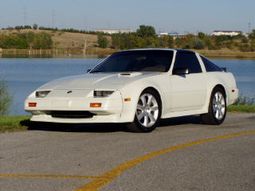
Nissan manufactured two special Z31 models. The 1984 300ZX 50th Anniversary Edition, released to celebrate Nissan's half-century, was a fully-loaded turbocharged model with a Silver/ Black color scheme. All 50th Anniversary Edition came equipped with a digital dash including MPG and compass readouts, in-car electronic adjustable shocks, Bodysonic speakers in the seats, cruise and radio controls in the steering wheel, mirrored t-tops, embroidered leather seats, embroidered floor mats, sixteen-inch aluminum wheels, rear fender flares, different front fenders, and 50th AE logo badges on the body. The only option available to the 50th Anniversary Edition was the choice between an automatic or a 5-speed manual transmission. Notably, 1984 also marks the last year of turbochargers cooled entirely by oil. 1985 turbo models are equipped with coolant passages to ensure turbo longevity. In 1988, the turbocharged Shiro Special debuted with pearl white paint, stiffer springs and matched shocks, heavy-duty anti-sway bars, a unique front air dam, paint matched wheels, Recaro seats, and a viscous, limited-slip differential. No other options were available for the Shiro, meaning all Shiros were identical. It was the fastest car out of Japan, capable of 153mph (246km/ h) speeds, as tested by Motor Trend with the electronic speed limiter disabled. A total of 1002 Shiro Special Z31s were produced for the US market between January and March 1988.
Style and evolution
The Z31 body was slightly restyled in 1986 with the addition of side skirts, fender flares, and sixteen inch wheels (all directly from the 1984 50th Anniversary Edition). Many black plastic trim pieces were also painted to match the body color, and the hood scoop was removed to provide a sleeker look. The car was given a final makeover in 1987 that included more aerodynamic bumpers, fog lamps within the front air dam, and 9004 bulb-based headlamps that replaced the outdated sealed beam headlights. The 300ZX-titled reflector in the rear was updated to a narrow set of tail lights running the entire width of the car and an LED third brake light on top of the rear hatch. The Z31 continued selling until 1989, more than any other Z-car at the time. Over 70,000 units were sold in 1985 alone.[citation needed]
In 1989 Nissan replaced the Z31 chassis with the Z32. Production of the naturally aspirated versions began in the Spring, followed by the twin-turbo in the Fall. The twin-turbo Z32 was publicly underrated at 276 horsepower so as to preserve a gentlemen's agreement among Japanese automakers. The new VG30DE engine code reflected the use of Dual overhead cam heads. The twin-turbo model had the VG30DETT ( Turbo - Turbo ) engine.
The twin-turbo 2+2 (four seat model) was never sold in the United States. Buyers in the U.S. who desired a four seat twin-turbo either had to legally import the foreign model, or convert a domestic NA 2+2 model to use a twin-turbo engine. The conversion process, which usually costs less than $10,000, can be performed by mechanics familiar with the Z32. The conversion entails switching many parts in the engine bay to the twin-turbo versions as well as making some slight engine bay alterations to fit certain parts such as the radiator.
Style and evolution
The Z32 chassis would likewise undergo several changes throughout its production run between 1989 and 1996. Among the milestone safety additions are the inclusion of standard driver and passenger-side airbags and true pillar-mount seat belts. The Z32's extended model year sales in 1990 reached 39,290 units.
1991
- Manual climate controls discontinued (except in convertible).
- New electronic climate controls allowing control over air flow direction, but no more ambient temp gauge.
- Nissan logo put on the front fascia (nose panel).
- Driver's airbag now optional.
- Air conditioner evaporator valve changed from aluminum to steel for better sound insulation.
- North American brake rotors changed to NA units. Previous NA rotors were 4 mm thinner.
- CD player option added for both the TT and NA; it was previously only available in the NA.
- Bose stereo head unit changed.
- Logo on floor mats changed from "300ZX" to "Z".
- Brake master cylinder changed to new unit in February 1991.
- Sales: 17,652 units.
1992
- Driver's airbag made standard.
- Brake caliper material changed from aluminum to iron, to help warpage/ shimmy problems.
- Dashboard and door complimentary material changed from fabric to suede.
- Separate mirror heater switch eliminated (combined with rear defroster switch).
- Mirror heaters made standard.
- Power adjustable driver's seat standard on TT.
- Sales: 6,708 units.
1993
- Turbo oil line insulation changed for better heat dissipation.
- Convertible option added.
- Upgraded Bose stereo made standard.
- AIV/ reed valves removed.
- Non-turbo model ECUs changed from 8-bit to 16-bit
- Sales: 11,599 units.
1994
- Rear spoiler design changed to a taller, pedestal-type.
- Seat belts redesigned; they were moved from door mounts to true pillar mounts.
- Super HICAS system changed to an electrically-actuated unit (previously oil pressure actuated).
- Passenger's side airbag introduced and made standard.
- Keyless entry added.
- Titanium keys discontinued in November 1994.
- 'Reset' button removed from clock.
- Off-white 'Pearl' colour is dropped. Future 'Pearls' are more of a semi-metallic white.
- Sales: 5,320 units.
1995
- New style fuel injectors that are less prone to premature failure
- Twin-turbo model ECUs changed from 8-bit to 16-bit (happened late in '94 model year)
- Front fascia became body coloured instead of gray strip.
- Sales: 3,135 units.
1996
- Variable cam timing (NVTC) dropped. Factory HP rating remains at 300hp (220kW) as seen on original 1996 model year window stickers and third-party dyno testing shows 300hp (220kW); dynamometer test's still show no significant difference in maximum torque output compared to earlier and later years, although the torque curve throughout the rpm range has slightly less area under the curve, compared to earlier years' models equipped with the variable valve timing system.
- OBD II electronics introduced.
- Driver's seat back rest no longer included adjustable side bolsters.
- Sales: 2929 Units total, 300 of which are the "Commemorative Edition."
In 1984 to 1985 showroom stock racing, the 300ZX captured wins on numerous occasions. The car scored its only Trans Am win in 1986 at Lime Rock by Paul Newman for Bob Sharp Racing.[citation needed]
From 1985 to 1987, the Electramotive-developed GTP ZX-Turbo was raced in the IMSA GT Championship's GTP class and also the All Japan Sports Prototype Championship, badged as a Fairlady Z, using a Lola T810 chassis and a VG30ET engine. Following development through 1987, the car would become dominant in IMSA GT in 1988. Additional factory endorsement, combined with a new chassis, transmission and more reliable Goodyear tyres contributed to the team's success. The SOHC VG30ET was making upwards of 1,000hp (700kW), with a power band that extended from 4000 to 9000 rpm on a single turbo.
From 1990 to 1995, Steve Millen drove the twin turbo 300ZX for Clayton Cunningham Racing. The car dominated the IMSA in its GTO, then later GTS categories due to its newly-designed chassis and engine. Millen would rank as the #1 Factory Driver for Nissan for 7 years and earn two IMSA GTS Driving Championships and two IMSA GTS Manufacturer's Championships. Among enthusiasts and the team themselves, the biggest triumph for the race Z32 was the victory in the 24 Hours of Daytona. In the same year at the 24 Hours of Le Mans, the 300ZX ranked first in the GTS-1 class and 5th overall. In an attempt to level the playing field in the GTS-1 class by reducing the allowable horsepower, the IMSA declared the twin turbo VG engine ineligible. The 1995 GTS 300ZX car would debut with the V8 Nissan VH engine at Daytona and would place first in the GTS-1 class at the 12 Hours of Sebring and Mosehead Grand Prix in Halifax.
The JUN-BLITZ Bonneville Z32 holds the E/ BMS class land speed record of 419.84km/ h (260.87 mph) set at the 1995 Bonneville Speed Trial. The vehicle was built as a partnership between JUN Auto and BLITZ. This record remains unbroken. In 1990 JUN's first Z32 went 339.2km/ h at their Yatabe test course and hit 373km/ h after some tuning at Bonneville.
- 1990: The 1990 300-ZX Turbo is named Motor Trend's "Import Car of the Year". Motor Trend also names it, "One of the Top Ten Performance Cars". Automobile Magazine honours the 300-ZX/ 300ZX Turbo as its "Design of the Year", and names the 300ZX Turbo to its "All Stars" list. Road & Track names the 300ZX Turbo "One of the Ten Best Cars in the World". Car and Driver names the 300ZX Turbo "One of the Ten Best Cars".
- 1991: The 300ZX Turbo is named to Car and Driver 's "Ten Best" list, and is once again one of Automobile Magazine's "All-Stars".
- 1992: For the third straight year, Car and Driver names the 300ZX Turbo one of its "Ten Best", and Automobile Magazine names it to its "All-Stars" list.
- 1993: For the fourth straight year, the 300ZX Turbo is named a Car and Driver "Ten Best", and one of Automobile Magazine's "All-Stars".
- 1994: For the fifth straight year, the 300ZX Turbo is named to the "Ten Best" and "All Stars" lists by Car and Driver and Automobile Magazine, respectively.
- 1995: For the sixth straight year the 300ZX Turbo is named to the "Ten Best" by Car and Driver.
- 1996: For the seventh straight year the 300ZX Turbo is named to the "Ten Best" by Car and Driver, this is also the final year of production in the US.
Even after production stopped magazines have continued to rave and award the 300ZX years later.
- 2004: Automobile lists the Z32 as one of the 100 greatest cars of all time.
- 2006: Automobile lists the Z32 on both the "20 Greatest Cars of the Past 20 years" and the "25 Most Beautiful Cars in History".
"once again beautiful, so sleek and tight and shimmering that it still looks great ten years after it went away" -Automobile, 2006
From the year it was introduced, the Z32 has also won many comparison tests against similar sports cars such as the Mitsubishi 3000GT/ Dodge Stealth, Mazda RX-7, Chevrolet Corvette, Toyota Supra, Dodge Viper, and the Porsche 968.
In Australia, the 1990 to 1995 Nissan 300ZX was assessed in the Used Car Safety Ratings brochure as providing "average" protection for its occupants in the event of a crash. The 300ZX was also reported by the United States Department of Transportation to be safer than other popular sports cars like the RX-7, Ford Mustang, Chevrolet Camaro, Pontiac Firebird, and the new Nissan 350Z in the event of a crash. This is due mainly to the advanced placement of the seatbelt being mounted on the door instead of on the body of the car (90-93 models).
From Wikipedia, the free encyclopedia
More About Nissan 300zx
|