Year of Toyota Celica
The Celica is powered by a 1.8 liter DOHC 4 cylinder with 140hp (GT-S model with 180hp). Standard features include 15 inch wheels/tires and 5 or 6 speed manual transmission. Options include ABS and 4 speed automatic transmission.
Toyota Celica photos, specs - Car Pictures & Images
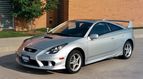
For the high-performance versions of the Celica, see Toyota Celica GT-Four.
The Toyota Celica name has been applied to a series of popular coupes made by the Japanese company Toyota. The name is ultimately derived from the Latin word coelica (IPA [selika]) meaning "heavenly" or "celestial".[citation needed] Throughout its life span the Celica has been powered by various four cylinder engines. The most significant change occurred in 1986, when the car's drive layout was changed from rear wheel drive to front wheel drive. During the first three generations, American market Celicas were powered by various versions of Toyota's R series engines. A four-wheel drive turbocharged model (designated All-trac in the US or GT-Four in Japan and Europe) was produced from 1986 to 2000. Variable Valve Timing came in late 1997 Japanese models, and became standard in all models from 2000 on. Through seven generations, the model has gone through many revisions and design forks, including the Toyota Celica Supra (later known as the Toyota Supra). The Celica was available as notchback and liftback coupes, as well as a convertible. |
Used Toyota Celica


The first generation Celica was released to the Japanese market in late 1970, and targeted to be a more affordable alternative to Toyota's sportscar, the 2000GT. Displayed at the 1970 Tokyo Motor Show in October, and marketed in December of the same year, the Celica was a personal car that emphasized styling and driving enjoyment. Japanese models were ET, LT, ST, GT, and GTV. For export markets, the Celica was offered in three different levels of trim; LT, ST and GT. The lower-end LT was equipped with the single carbureted four-cylinder 2T engine displacing 1600cc, while the ST came with a twin downdraft-carburetor 2T-B engine. The 2T-G that powered the high-end GT model was a DOHC 1600 cc engine equipped with twin Mikini-Solex Carburettors. All early Celicas were pillarless hardtops with the Liftback model exported from 1976, however, the Liftback was available in Japan from 1973. The Japanese GT models had various differences from the ET, LT and ST including the hood flutes, power windows, air conditioning, and specific GT trim, but shared a few things with the ST - a full-length centre console and oil pressure/ ammeter gauges whilst the LT had warning lights for these functions. There was also the GTV version, which had the 2T-G engine, a slightly cut-down interior, and did not come standard with things like power windows, but they were optional. The GTV has firmer suspension. The first generation Celicas can be further broken down into two distinctive models. The first of these was the original with slant nose (trapezoid-like shape front corner light). This is for Coupe model only, TA22, RA20, and RA21. These models were released from 1970 to 1975 and came equipped with the 2T, 2T-G 1.6 liter, or 18R 2.0 liter motor. They had a 95" wheelbase. The second series (98" wheelbase) had a flat nose (square front corner light) and slightly longer wheelbase. This facelift model appeared in Japan in 1974, but for export was the 1976 model year. » Read More About Toyota Celica |
Toyota Celica Pictures by Years


