Year of Suzuki Jimny Sierra
Suzuki Jimny Sierra photos, specs - Car Pictures & Images
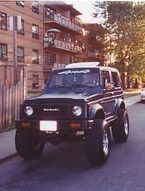 The Suzuki SJ-Series began production in 1982 in Hamamatsu, Japan. In Japan, the SJ-Series was sold as the Suzuki Jimny and was a kei car. It was produced with both 550 cc and 660 cc 3-cylinder engines for domestic use. The SJ-Series was lengthened and widened for export purposes and had many names worldwide: Suzuki Samurai, Suzuki Sierra, Suzuki Potohar, Suzuki Caribbean, Suzuki Santana, Holden Drover (Australia) and Maruti Gypsy (India). Jimny 55 |
Used Suzuki Jimny Sierra


Jimny 8 Jimny 550 SJ40 Jimny 1000 The SJ410 was introduced in 1982 as an updated version of the LJ80. It used a larger version of that LJ's 1.0 liter 4-cylinder engine. This engine produced 45hp (34kW) and it had a top speed of 68mph (109km/ h). A 4-speed manual transmission was standard, as were non-power assisted drum brakes front and rear. The SJ-410 came as a half-door convertible, pickup truck, 2-door hardtop, raised-roof hardtop, and no-glass hardtop. The SJ was produced in Spain by Santana Motors in their Linares, Jaén factory and sold as a domestic vehicle in Europe due to its over 60% native parts. JA51 Jimny 1300 In 1984, the SJ was revamped with the launch of the SJ413. The SJ413 included a larger 1.3 liter 4-cylinder engine, 5-speed manual transmission and power brakes all around. The body and interior were also redesigned, with a new dashboard, seats, and grille. The SJ410 remained in production through 1985 with the old specifications. The SJ-Series was introduced to the United States (Puerto Rico (SJ-410) and Canada earlier) in 1985 for the 1986 model year. It was priced at just $6200 and 47,000 were sold in its first year. The Samurai had a 8V 1.3 liter, 63hp (47kW), 4-cylinder engine and was available as a convertible or a hardtop. The Suzuki Samurai became intensely popular within the serious 4wd community for its extreme off road performance and reliability compared to other 4wds of the time. The Samurai is also considered a great beginner 4wd due to its simple design and ease of modifications with engine swaps and suspension upgrades. The 1988.5 model Samurai was re-tuned for better on-road use in the United States. This revision included softer suspension settings and a larger anti-sway bar to reduce body roll. A lower 5th gear (.865:1 vs the earlier .795:1) increased engine rpm and power on the highway, and improved dashboard and seats made the Samurai more comfortable. » Read More About Suzuki Jimny Sierra |
Suzuki Jimny Sierra Pictures by Years


