Year of Seat Toledo
Seat Toledo photos, specs - Car Pictures & Images
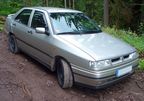 The SEAT Toledo is an automobile built and marketed by Spanish automaker SEAT, a division of the Volkswagen Group (Volkswagen AG). The Toledo name was first introduced to the SEAT line-up in 1991, and the third generation was introduced in late 2004. The Toledo was the first SEAT developed entirely under VW leadership. The first generation was a five-door liftback built on the Volkswagen Golf Mk2 Volkswagen Group A2 platform chassis, with boot similar in shape and size to the Volkswagen Bora's but with the advantage of a tailgate. As saloon versions of small family cars were rare in Europe, it was sometimes considered a large family car due to its overall length and boot size, despite having smaller rear leg room, and pricing closer to small family cars. |
Used Seat Toledo


The Toledo initially featured underpowered engines compared to the Ibiza and Málaga's System Porsche units, such as a base 1.6L 75PS (55kW) petrol engine and a GT version using the 2.0L 115PS (85kW) engine. Later the Toledo would see the addition of more powerful versions, including a 150PS (110kW) 2.0 GTI 16V and 110PS (81kW) 1.9 TDI which, like many diesels built since 1996 by the Volkswagen Group, it is advertised as capable of running on both mineral diesel and biodiesel. This version of the Toledo is built by Chinese car manufacturer Chery and sold under the names Chery Amulet, Cowin, Windcloud and Flagcloud. Chery acquired the chassis of the 1993 Toledo from a Mexican dealership after authorization from SEAT. Chery Cowin ,which is based on Seat Toledo, already has an authorization to market it in Europe along with Russia and South America. Engine choicesThe second generation was introduced in 1998. It was more rounded than the previously boxy shape. It had a much more fluid design, although both were products of Giorgetto Giugiaro's Italdesign studio. It shared components with both its Škoda and Volkswagen brothers (the Octavia and the Bora) yet is supposedly the sportiest out of the three, and sport details have been added, such as completely translucent headlights not often seen in cars at that time, and a more rounded dashboard with white dials. It was built on the Volkswagen Golf Mk4 platform, which meant stiff springs to support the load of the large 500 litre boot. The early models were built at the Audi/ VW plant in Belgium with much improved build quality, although the Toledo was still presented as an economic alternative to the lower level of the D segment, and included in the basic price a high level of equipment. One of the features most associated with the Spanish model, the tailgate was removed in favour of a more traditional saloon boot opening. The following year, the Toledo would be used as the base for a proper hatchback, the SEAT León. » Read More About Seat Toledo |
Seat Toledo Pictures by Years


