Year of Saab 900
Saab 900 photos, specs - Car Pictures & Images
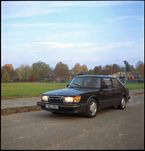 The 900 is a car that was made by Saab Automobile from 1978 until 1998 in two generations. The first generation from 1978 to 1993 is known as the "classic"; the generation from 1994 to 1998 is known as the "new generation" (see below). The "classic" 900 is based on the Saab 99 chassis, though with a longer front end to meet U.S. frontal crash regulations. The 900 was produced in 2- and 4-door sedan, and 3- and 5-door hatchback configurations; additionally, from 1986, a cabriolet (convertible) model was produced. There were single- and twin-carburetor, fuel-injection and turbocharged engines, including both Full Pressure Turbo (FPT), and in European models during the early 90s, Low Pressure Turbos (LPT). |
Used Saab 900


The Saab 900 was a front-engined, front-wheel-drive compact car with a longitudinally-mounted, 45-degree slanted, inline 4-cylinder engine, double wishbone front suspension and beam-axle rear suspension. In its heyday, the 900 was popular with drivers who enjoyed its comfort, safety, practicality (especially hatchbacks), and highway driving manners. Like its predecessor the 99, the 900 contained a number of unusual design features that distinguish it from most other cars. Firstly, the engine was installed 'backwards', with power delivered from the crank at the front of the car. Secondly, the transmission, technically a transaxle, bolted directly to the bottom of the engine to form the oil pan (albeit with separate oil lubrication). Power from the crank would thus be delivered out of the engine at the front, then transferred down and back to the transmission below, via a set of chain-driven primary gears. Similarly, Minis also had their gearbox mounted directly below the engine; however, the Mini gearbox and engine shared the same oil, whereas the Saab 900 (and 99) gearboxes contained a separate sump for engine oil. Very few front-wheel drive cars used a longitudinally-mounted engine configuration. Fewer still used a double wishbone suspension design. Refined over several decades of two-digit Saab models, the 900's double wishbone design provided excellent handling and road feel. The rear suspension comprised a typical beam axle design, stabilized with a Panhard rod. However, the attachment points between the axle and chassis made up an unusual configuration that essentially consists of two Watt's linkages at either end of the axle: a lower control arm attaches the axle to the bottom of the vehicle, while an upper link attaches at the top but faces towards the rear, unlike a typical 4-link design with both lower and upper links facing forward. Early models did not have sway bars; they began appearing on certain models in 1985 and in U.S. and possibly other markets, became standard on all trim levels by the late 1980s. The sway bars decreased body roll, but at the expense of some ride comfort and when driven aggressively, increased inside wheelspin. The front and rear bars' diameters were unchanged throughout the model's run. » Read More About Saab 900 |
Saab 900 Pictures by Years


