Year of Porsche 928
The 928 is available with a 5.4L, 8 cylinder 345 hp engine. ABS is standard and options included manual or automatic transmission.
Porsche 928 photos, specs - Car Pictures & Images
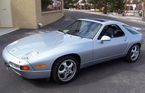 The Porsche 928 is a grand tourer automobile sold by Porsche AG of Germany from MY 1978 to MY 1995, during which time it was one of their most expensive offerings. In 1983 the 928S with 5-speed manual transmission and 4.7L-16v M28/ 19 engine was the fastest car sold in North America, at 146 mph. It was the fastest production road-car in the world in 1986, having been recorded at 172mph (277km/ h) on the salt flats in Utah using an early 928 S4.[citation needed] By the late 1960s, Porsche had changed significantly as a company, and executives including owner Ferdinand Porsche were playing with the idea of adding a luxury touring car to the line-up. Managing Director Ernst Fuhrmann was also pressuring Ferdinand to approve development of the new model in light of concerns that the current flagship model at the time, the 911, was quickly reaching its maximum potential where it could soon no longer be improved upon. Slumping sales of the 911 seemed to confirm that the model was approaching the end of its economic life cycle. Fuhrmann envisioned the new range-topping model as being the best possible combination of a sports coupe and a luxury sedan, something well equipped and comfortable enough to be easily driven over long distances that also had the power, poise and handling prowess necessary to be driven like a sports car. This set it apart from the 911, which was a pure sports car. |
Ordered by Ferry Porsche to come up with a production-feasible concept for his new model, Fuhrmann initiated a design study in 1971, eventually taking from the process the final specs for the 928. Several drivetrain layouts were considered during early development, including rear and mid-engined designs, but most were dismissed because of technical and/ or legislative difficulties. Having the engine, transmission, catalytic converter(s) and exhaust all cramped into a small rear engine bay made emission and noise control more difficult, something Porsche was already facing problems with on the 911 and wanted to avoid. After deciding that the mid-engine layout didn't allow enough room in the passenger compartment, a front engine/ rear wheel drive layout was chosen. Porsche also feared at the time that the U.S. government would ban the sale of rear-engined cars in response to the consumer outrage over the Chevrolet Corvair, started by Ralph Nader via his book "Unsafe at Any Speed"[citation needed]. Porsche engineers wanted a large-displacement motor to power the 928, and prototype units were built with a 5.0 L V8 producing close to 300hp (220kW). Very early units used one four-barrel carburetor, which was eventually rejected in favor of Bosch's K-Jetronic fuel injection system. When increasing concern within the company over the pricing and availability of fuel during the oil crisis of the 1970s became an issue of contention, smaller engines were considered in the interest of fuel economy. A push began for the development of a 3.3 L 180hp (130kW) powerplant they had drawn up specs for, but company engineers balked at this suggestion. Both sides finally settled on a 4.5 L, SOHC 16-valve V8 producing 240PS (237hp/ 177kW) (219hp (163kW) in North America), which they considered to have an acceptable compromise of performance and fuel economy. The finished car debuted at the 1977 Geneva Motor Show before going on sale later that year as a 1978 model. Although it won early acclaim for its comfort and power, sales were slow. Base prices were much higher than that of the previous range-topping model and its larger size; the 928's futuristic styling put off many purists who were more attracted to the more compact 911. » Read More About Porsche 928 |
Porsche 928 Pictures by Years
