Year of Opel Omega A
Opel Omega A photos, specs - Car Pictures & Images
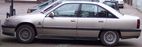
There was also an Oldsmobile Omega, an unrelated vehicle that was produced during the 1970s and 1980s
The Opel Omega was an executive car produced by the German automaker Opel between 1986 and 2003. Replacing the Opel Rekord, it was voted European Car of the Year for 1987. Like the Rekord, the Omega was produced at Rüsselsheim in Germany. There were two generations of the model, the latter (Omega B) debuted in 1993. The Omega was available as saloon or estate (Caravan). In the United Kingdom, the Omega A was marketed as the second generation Vauxhall Carlton (the first generation Vauxhall Carlton having been a rebadged Opel Rekord) E2, and the Omega B generation as Vauxhall Omega. The Omega was also built and sold in Brazil badged as a Chevrolet Omega and Suprema (Caravan), but this name is now used for imported Holden Commodores. A badge engineered version of the Omega B MV6 was also sold in North America under the name of Cadillac Catera. |
Used Opel Omega A


In the United Kingdom, the Benelux countries, Germany and Italy, the Omega was widely used as a police car and was once commonly used as a security vehicle to transport politicians etc. Following the cessation of production in 2003, the closest Vauxhall equivalent now used by police forces is the Opel Vectra. The car has also been converted into limousines and hearses. Production of the Omega ceased in 2003. There was no direct replacement for it, as executive models from "non-prestige" manufacturers were proving less popular by the early 2000s; rival manufacturer Ford had pulled out of this sector in 1998 on the demise of its Scorpio. DevelopmentThe original Omega went into production in September 1986 as a replacement for the Opel Rekord, which had been in production since 1978. Sales began in November. The body was designed as an evolution of the previous Opel design theme engineered more towards aerodynamics in view of higher fuel prices and the general drive towards more fuel efficiency. The result was a remarkable drag coefficient of 0.28 (0.32 for the Caravan). The whole development program cost 2 Billion Deutschmark. The Omega A was available in saloon and estate (Caravan) bodystyles as a competitor for the likes of the Ford Scorpio and Rover 800. Like the late Rekord, the Omega A adopted the Vauxhall Carlton nameplate for the British market. The Rekord-based Opel Senator A was also superseded by the Senator B, based on a similar concept - a stretched Omega platform and body along with some unique sheetmetal modifications. Technical noveltiesCompared to the Rekord, the Omega featured many modern technological advances, which were new to Opel in general, if not to the volume segment European automotive market. These included electronic engine management, ABS, on-board computer (which displayed parameters such as momentary fuel consumption or average speed), air-conditioned glove compartment and even the then-fashionable LCD instrument cluster (available in some version from 1987 but dropped in 1991). More importantly, the Omega came with a self-diagnose system (which is now a standard feature in present-day cars), whose output could be read by appropriately equipped authorized service stations. » Read More About Opel Omega A |
Opel Omega A Pictures by Years


