Year of Fiat Coupe
Fiat Coupe photos, specs - Car Pictures & Images
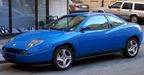 The Fiat Coupé (type 175, officially titled the Coupé Fiat) was a coupé produced by the Italian manufacturer Fiat between 1993 and 2000. The car was introduced at Brussels Motor Show in 1993. It is most remembered for its distinctive, angular design, with unique scalloped side panels. The body was designed by Chris Bangle from "STILO FIAT Center", while the interior was designed by Pininfarina. The exterior design would foreshadow much of late 1990s and early 2000s car design, acting as a precedent to both Bangle's somewhat notorious work at BMW, as well as futuristic angular designs by other marques such as Ford and Renault. |
On its launch in 1994, the Coupé was available with a four cylinder, 2.0 L 16V engine, in both turbo (195bhp) and normally-aspirated (139bhp) versions. Both engines later versions of Fiat's twin-cam design and inherited from the Lancia Delta Integrale, winner of the World Rally Championship a record six times. 1996 brought in a 1.8 L 16V engine (not available in the UK, 130bhp), along with a 2.0-litre 5-cylinder 20V (147bhp), and a 5-cylinder 2.0-litre 20V turbo (220PS (217hp/ 162kW)). With a 0-60mph time of 6.3 seconds, the 2.0 turbo was the fastest European front-wheel drive car at the time. A top speed of 155 mph (250 km/ h) was also quoted. The turbocharged 16 and 20 valve versions were equipped with a very efficient Viscodrive limited-slip differential to counter the understeer that plagues most powerful front wheel drive cars. Additionally, the coupe featured independent suspension all round: At the front MacPherson struts and lower wishbones anchored to an auxiliary crossbeam, offset coil springs and anti-roll bar; At the rear, trailing arms mounted on an auxiliary subframe, coil springs and an anti-roll bar. 1998 saw the release of the Limited Edition which featured red Brembo brake calipers at the front and standard red calipers at the back, a body kit, push-button start, six-speed gearbox, strut brace to make the chassis more rigid and Recaro seats with red leather inserts which offered better support than the standard 20VT seats. The LE was produced in Black (flat), Red (flat), Vinci Grey (Metallic), Crono Grey(Flat) and Steel Grey(Metallic). The bodywork of the LE also benefited from titanium coloured insert around the light bezels and the wing mirrors. Each Limited Edition ('LE') Coupé was manufactured with a badge located by the rear-view mirror which contained that car's unique number (it is rumored that Michael Schumacher was the original owner of LE No. 0001). Originally Fiat stated they were only to build approximately 300 Limited Editions. The final amount was much higher, with numbers as high as 1400 touted by some. This angered many of the owners of the original 300 cars and almost certainly impacted residual values. » Read More About Fiat Coupe |
Fiat Coupe Pictures by Years

