Year of Citroen XM
Citroen XM photos, specs - Car Pictures & Images
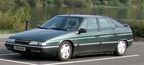 The Citroën XM is an executive car that was produced by the French automaker Citroën between 1989 and 2000. Citroën sold 330,000 XMs during the model's 10 years of production. The XM was voted 1990 European Car of the Year. Launched in 1989, the XM was the modern iteration of the Big Citroën, a replacement for the Citroën CX. The XM won the prestigious European Car of the Year award in 1990 and went on to win a further 14 awards that year. |
The extreme, slender, and well-proportioned Bertone design, which took Gandini's Citroën BX concept to its natural conclusion. Its looks drew heavily on the Citroën SM of the 1970s, sharing similar lines and looks, tailored to meet higher production numbers and lower production cost. There were many advances, most apparently designed to counteract concerns about the vintage CX design. The CX leaned in corners, so the XM had active electronic management of the suspension; the CX rusted, so the XM had a part-galvanised bodyshell (most surviving XMs have very little corrosion); the CX was underpowered, so the XM offered the option of a 3.0L V6 engine – the first in a Citroën since the Maserati-engined SM of 1970. The XM shared a floorpan with the Peugeot 605 - the two models fared similarly in both teething problems and market acceptance. Unlike the CX and the 605 sedans, the XM was a liftback design - a feature thought to be desirable in certain European markets. The XM inherited a loyal global customer base of executive class customers and a clear brand image, but did not enjoy the commercial success and iconic status of its predecessors, the CX and the DS, which both raised the bar of automotive performance for other manufacturers. Export markets experienced lower sales from the outset, and home market sales also declined, after the mechanical issues of the first few model years became known. The least expensive XM was nearly 50% more expensive at the time of launch than the corresponding CX. In spite of that, it sold well during the first two years. Unfortunately it suffered from defective electrical connectors, due to excessive economies on the components, since the parent company was in financial difficulty at the time of the design of the XM. With total sales over its lifetime of just 330,000 units and no immediate replacement, the XM might be considered a failure, particularly in markets such as the United Kingdom, where demand was reduced to a virtual trickle by the late 1990s. But despite its common roots with the Peugeot 605, the XM may still emerge as a collectible car, as the DS and CX both did. » Read More About Citroen XM |
Citroen XM Pictures by Years
