1992 Citroen BX 15
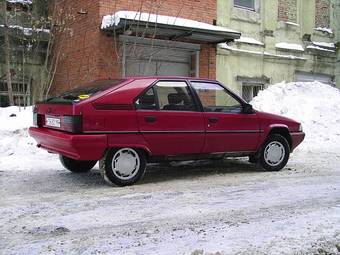
Full Picture Size: 640x480
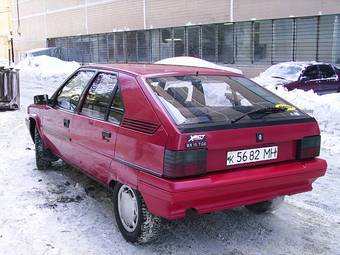
Full Picture Size: 640x480
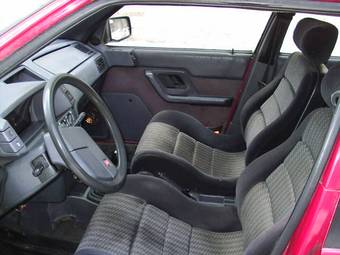
Full Picture Size: 640x480
1992 Citroen BX 15 specs
|
The Citroën BX was launched in Paris 1983 under the Eiffel Tower. The BX was designed to replace the successful small family car Citroën GS with a larger vehicle. The last BX was made in 1995, but its successors had already been launched. It had been partially replaced by the smaller ZX in early 1991, but its key replacement was the slightly larger Xantia that had gone on sale in early 1993. The angular Gandini-designed hatchback was strongly inspired by the British 1977 Reliant FW11 concept and the 1979 Volvo Tundra concept car (also designed by Bertone). It was one of the first cars to benefit from the merger of Peugeot and Citroën in 1976, sharing its platform with the more conventional 405 that appeared in 1987. Among the features that set the car apart from the competition was the traditional Citroën hydropneumatic self-levelling suspension, extensive use of plastic body panels (hood, tailgate, bumpers), and disc brakes front and rear. The BX used the XY, TU and XU series of petrol engines in 1.4 L, 1.6 L and 1.9 L displacements (a 1.1 L engine, very unusual in a car of this size, was also available in Italy, Portugal and Greece). The 1.1 and 1.4 unit was an old Peugeot/ Reanult powertrain with its roots in the Peugeot 104 and Renault 14, but the 1.6 and 1.9 was all-new and later used in many Peugeots. The class leading XUD diesel engine version was launched in 1984. The diesel and turbo diesel models were to become the most successful variants, they were especially popular as estates. It was this Peugeot influence that endowed the BX with some much needed reliability, something for which its predecessor, the GS, had a marginal reputation. This led to the BX's famous advertising slogan "Loves Driving, Hates Garages". » Read More About Citroen BX 15 |