Year of Chrysler Crossfire
Making it's debut for the 2004 model year is the Chrysler Crossfire coupe which is only available as a stand alone model. The Crossfire comes standard with a 3.2L V6 215 horse power engine paired to a manual six speed transmission with overdrive.
Chrysler Crossfire photos, specs - Car Pictures & Images
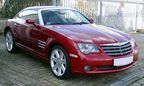 The Chrysler Crossfire is a rear-wheel drive, sports car marketed by Chrysler as both coupé and roadster and built for Chrysler by Karmann of Germany. The two-seater arrived in 2001 as a concept car designed by Eric Stoddard with further refinement by Andrew Dyson before production in 2003. The name Crossfire refers to the two character lines that run from front to rear along the body sides — crossing each other midway through the door panel. Conceived during the period of Chrysler's ownership by Daimler-Benz, the name also refers to the collaboration of the two companies. |
Used Chrysler Crossfire


The Crossfire shares 39%[citation needed] of its components with other Mercedes models. The chassis is a combination of a modified C-class engine compartment, pre-2003 SLK platform, S-Class rear linkages and new stampings for the side rails and rear. The standard transmission is a 6-speed manual with an optional 5-speed automatic. Base (Standard) and Limited models, originally sold beginning in the 2004 model year, are equipped with a 3.2L, 18-valve, SOHC V6 engine which produces 215hp (160kW) and 229lb·ft (310N·m) of torque. The sales of the Crossfire have been slow, with an average 230 day supply of the vehicles as of November 2005. In December, the cars were listed on Overstock.com to clear out inventory. Very few Crossfires were imported to the United States and Mexico for 2006 (and almost all of these were roadsters). On November 1, 2007, Chrysler announced that, as part of its restructuring plans, the Chrysler Crossfire would be one of four models discontinued after the 2008 model year. The last Crossfire rolled off of the assembly line on December 17, 2007. Note: Cars produced in one calendar year may be marketed as the following model year.For the first model year (2004), only the coupe was offered (with no "trim" levels), equipped quite similarly to the next year's "limited" model. In model year 2005, there were six variants available; Coupe and Roadster, each with three trim levels: Base (with fewer amenities), Limited, and SRT-6 (supercharged). SRT-6The SRT-6 trim level, as both coupe and convertible, featured the supercharged engine delivering 330hp (246kW) and 310lb·ft (420N·m) of torque. Differentiating features included suspension and brake modifications, front spoiler, Autostick transmission, fixed vs. retractable rear spoiler and available navigation system. In 2006, the SRT-6 was changed to special order only and the Base trim level was renamed to Standard. » Read More About Chrysler Crossfire |
Chrysler Crossfire Pictures by Years


