Year of Audi TT
The TT is available with a 1.8-liter turbocharged inline-4 with 180 hp or the optional 1.8-liter turbocharged inline-4 with 225 hp. ABS is standard. Other options include front, or all wheel drive and manual or automatic transmission.
Audi TT photos, specs - Car Pictures & Images
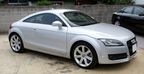 The Audi TT is a sports car manufactured by Audi since 1998 in Győr, Hungary, now in its second generation — and available as a 2+2 coupé or two-seater roadster. The development of the Audi TT began in September 1994 at the Audi Design Center in California. The TT was first shown as a concept car at the 1995 Frankfurt Motor Show. The design is credited to J Mays and Freeman Thomas with Martin Smith contributing to the award winning interior design. A previously unused laser welding adaptation that enabled seamless design features on the first-generation TT, also delayed its introduction. |
Used Audi TT


Audi did not initially include an automatic transmission option for the TT. A DSG (S-Tronic) became available, the first for a production car, in 2003. The TT is named for the successful racing tradition of NSU in the British Isle of Man TT motorcycle race. NSU began competing in the TT in 1911 and later merged into the company now known as Audi. The Audi TT also follows the NSU 1000TT, 1200TT and TTS cars of the 1960s in being named for the race. The Audi TT Roadster was presented in Detroit in 1999 under the name Audi TTS. After one year the name was changed to Audi TT Roadster.[citation needed] The production model (internal designation Typ 8N) was launched as a coupé in September 1998, followed by a roadster in August 1999, based on the Volkswagen Group A4 (PQ34) platform used for the Volkswagen Golf Mk4, Skoda Octavia and others. The styling differed little from the concept, except for slightly reprofiled bumpers and the addition of a rear quarterlight windows behind the doors. Mechanically, the TT uses a transversely mounted engine with front or quattro four-wheel drive. It was first available with a 1.8L turbocharged inline four cylinder 20-valve engine, with either 180PS (132kW) or 225PS (165kW). The engines share the same basic design but the 225PS version features a larger turbocharger, an additional intercooler on the driver's side, forged connecting rods, a dual exhaust, and a few other internals designed to accommodate the increase in turbo boost from roughly 10 psi peak to 15. Haldex enabled four wheel drive branded as quattro was optional on the 180PS (132kW) engine, and standard on the more powerful version. Early TT models gained press coverage for a series of high-speed accidents in Europe. Reported crashes and related fatalities occurred at speeds in excess of 110mph (180km/ h) during abrupt lane changes or sharp turns. Both the coupe and roadster models were recalled in late 1999/ early 2000 to improve predictability of the car's handling at very high-speeds. Audi's Electronic Stability Programme, and rear spoiler were added, along with suspension modifications. All changes were subsequently incorporated into future versions of the car. » Read More About Audi TT |
Audi TT Pictures by Years


